Essential Oils in Soap: Scent, Safety and Skin
Essential oils give soap a scent you can trace back to a plant. Here is how they behave in a bar, why some fade, and how to choose one that suits your skin.

Key takeaways
- Essential oils are named on the label, which makes scented soap easier to judge than "fragrance."
- They are natural, but not automatically gentle; some contain known skin allergens.
- Careful makers keep amounts modest and follow published safety guidance for rinse off products.
- Bright citrus notes often fade during cure, while woody and herbal oils tend to last.
Most people who switch to handmade soap still want their shower to smell good. Essential oils in soap make that possible without the mystery of a single "fragrance" line on the label. They are a natural, readable way to scent a chemical free soap, but they are also concentrated plant compounds, and they deserve the same respect a good cook gives a strong spice.
What essential oils are
Essential oils are the aromatic compounds of a plant, usually captured by steam distillation (lavender, cedarwood, tea tree) or by cold pressing the peel (orange, lemon, grapefruit). A single oil can contain dozens of natural molecules. Lavender, for example, is rich in linalool and linalyl acetate, while sweet orange is mostly limonene.
On a well written label, each one is named, often with its botanical name: Lavandula angustifolia (lavender) oil, Melaleuca alternifolia (tea tree) leaf oil, and so on. That transparency is the main reason many people prefer them to synthetic fragrance blends. Our article on fragrance in soap explains why the single word "fragrance" is harder to judge.
How essential oils behave in soap
Some scents fade during cure
Fresh soap batter is strongly alkaline and warm, and the bar then rests for weeks while water evaporates. Light, volatile top notes, especially citrus oils, can fade a great deal during that time. A lemon bar that smelled bright on day one may be faint by week six. You can read more about this resting period in soap curing: why good bars rest for weeks.
Heavier oils anchor a blend
Woody and earthy oils evaporate slowly, so makers use them as "base notes" to hold a scent together. Cedarwood, patchouli and vetiver are classic anchors. Herbal and medicinal smelling oils such as tea tree, rosemary and peppermint also tend to come through well.
Some oils behave oddly
A few essential oils can speed up how fast soap batter thickens, and some, like clove, can discolor a bar. These are maker problems more than shopper problems, but they explain why some scents are more common in handmade soap than others.
Scents that hold up well in a bar
| Essential oil | Scent character | How it lasts in soap |
|---|---|---|
| Lavender | Floral, herbal | Good |
| Cedarwood | Dry, woody | Very good, often an anchor |
| Tea tree | Fresh, medicinal | Good |
| Peppermint | Cool, sharp | Good, can feel tingly |
| Rosemary | Herbal, camphor like | Good |
| Patchouli | Earthy, deep | Excellent, strong anchor |
| Sweet orange or lemon | Bright citrus | Often fades unless blended |
Natural does not mean risk free
Essential oils are among the most potent ingredients in natural body care. Being honest about that is part of using them well.
- Allergens. Many essential oils naturally contain compounds such as linalool, limonene, geraniol, citral and eugenol, which are known contact allergens for some people. That is why European labels must list them above set levels.
- Oxidation. As some oils age and are exposed to air and light, certain components oxidize, and the oxidized forms are more likely to sensitize skin. This is one reason fresh oils and sensible storage matter.
- Hot oils. Cinnamon bark, clove bud and oregano are strong skin sensitizers and are used sparingly, if at all, in soap.
- Phototoxic oils. Some cold pressed citrus oils, notably bergamot and lime, can cause skin reactions in sunlight. This is mainly a concern for leave on products. Because soap is rinsed off, the risk is much lower, though some makers still choose bergaptene free bergamot.
The main site's guide to essential oil benefits, dilution and safety goes deeper on these points.
How much essential oil goes into soap?
Exact amounts vary by oil, but responsible makers stay within published safety guidance, such as the standards set by the International Fragrance Association (IFRA), which has separate limits for rinse off products, and reference works like Tisserand and Young's Essential Oil Safety. Many soap makers use roughly 3 percent or less of the oil weight, and lower amounts for strong or sensitizing oils.
As a shopper, you can judge this by nose. A good bar smells pleasant when you hold it close and leaves only a faint trace on your skin after rinsing. If a bar perfumes the whole room from across the counter, it may be scented heavily.
Who should be careful
- People with eczema or very sensitive skin. Start with unscented soap and add scent slowly, if at all. See choosing soap for sensitive skin.
- Young children. Some safety references advise avoiding peppermint and eucalyptus near the faces of babies and young children. Our guide to gentle soap for kids covers family choices.
- Pregnancy. Rinse off soap is a low exposure use, but it is reasonable to check with your doctor or midwife about any scents you are unsure of.
- Anyone with a known plant allergy. Read the botanical names. Someone allergic to ragweed, for example, may want to be careful with chamomile.
A simple way to try a new scent
- Wash a small patch on your inner forearm once a day for three or four days.
- Watch for redness, itching or bumps, which can appear a day or two later.
- If your skin stays calm, use the bar as normal. If not, stop and note which oils were in it.
Patch tests at home are helpful but not definitive. A dermatologist can run formal patch testing if reactions keep happening.
Storing scented bars
Keep spare bars in a cool, dark, dry place with some airflow, not sealed in plastic in a hot bathroom. That slows oxidation and keeps the scent fresher. More storage tips are in does handmade soap expire.
How we use essential oils
We scent our soaps lightly and name every oil we use, because we think you should be able to read your soap like a recipe. Our Man Bar blends tea tree, cedarwood and a bergamot mint note over our olive and shea base, a combination we explore in tea tree and cedarwood soap. If you prefer no scent at all, our article on unscented vs fragrance free soap explains what to look for.
From the ranch
Made in small batches, without the ingredients discussed above.
 Man BarTea tree, cedarwood and bergamot mint in a clean, rugged bar.
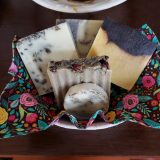 Body BarA true cold process soap for gentle, everyday cleansing.
Questions people ask
Are essential oils safe in soap?
Used in modest amounts that follow published safety guidance, essential oils are generally well tolerated in rinse off soap. They can still cause reactions in sensitive people because they contain natural allergens such as linalool and limonene, so patch testing a new scent is wise.
Why does the scent of my handmade soap fade?
Light, volatile oils, especially citrus, evaporate during the weeks of curing and over months on the shelf. Heat, light and air speed this up. Storing bars somewhere cool and dark helps, and blends with woody base notes last longer.
Which essential oils are best for soap?
Lavender, cedarwood, tea tree, peppermint, rosemary and patchouli hold up well in cold process soap. Citrus oils smell lovely but fade unless blended with an anchoring oil. Strong sensitizers like cinnamon bark and clove are best avoided or used very sparingly.
Is essential oil soap good for sensitive skin?
It can be, but unscented soap is the safest starting point for sensitive or eczema prone skin. If you want scent, choose a bar with one or two named oils, used lightly, and patch test before regular use.
Sources and further reading
- Robert Tisserand and Rodney Young, Essential Oil Safety, 2nd edition (Churchill Livingstone)
- International Fragrance Association (IFRA), IFRA Standards
- National Center for Complementary and Integrative Health (NCCIH), Aromatherapy and Essential Oils
- European Commission, Regulation (EU) 2023/1545 on fragrance allergen labeling
- American Contact Dermatitis Society, Contact Allergen Management Program resources
This guide is for general education and is not medical advice. If you have a skin condition, allergy, or are pregnant or nursing, talk with your doctor or a board certified dermatologist about the products that are right for you.