What Is Chemical Free Soap? An Honest Definition
Everything is made of chemicals, soap included. Here is what "chemical free soap" honestly means, what a good bar leaves out, and how to recognize one on the shelf.

Key takeaways
- Strictly speaking, no soap is free of chemicals. Water, olive oil and soap itself are all chemicals.
- In everyday use, chemical free soap means a true soap made from plant oils, without synthetic detergents, synthetic fragrance, dyes or extra preservatives.
- A short ingredient list of saponified oils, water, and perhaps essential oils or clay is the clearest sign of a simple bar.
- Words like "natural" and "pure" are not regulated, so the ingredient list matters more than the front label.
If you have searched for chemical free soap, you have probably met two kinds of answers. One side says the phrase is meaningless because everything is a chemical. The other side uses it as a marketing badge without saying what it means. Both have a point, and neither helps much when you are standing in a store holding a bar and wondering what is inside it. This guide gives an honest working definition, so you can shop with clear eyes.
Yes, Everything Is a Chemical
Let us get the obvious part out of the way. Water is a chemical. So is olive oil, and so is the soap that forms when olive oil meets lye. Every bar ever made, including the simplest one stirred in a farmhouse kitchen, is the product of a chemical reaction. Anyone selling soap that is literally free of chemicals is selling a bar of nothing.
So when we use the phrase on this site, we do not mean "free of chemistry." We mean something narrower and more useful: soap made from real oils through the old saponification reaction, without the long list of synthetic additives that most mass market bars carry. If you want the chemistry behind that reaction, our guide on whether lye in soap is safe walks through it.
A Working Definition
Here is the definition we use, and the one we suggest you hold any brand to:
- It is true soap. The cleansing comes from saponified fats and oils, not from synthetic surfactants like sodium lauryl sulfate or sodium cocoyl isethionate.
- No synthetic fragrance. If it is scented, the scent comes from named essential oils or botanicals, not a catch all "fragrance" or "parfum."
- No synthetic dyes. Color, if any, comes from clays, plant powders or the oils themselves.
- No added preservatives or chelators it does not need. Solid soap is a very dry, high pH environment, so it does not need the preservatives a water based lotion would.
- Glycerin left in. The glycerin that forms naturally during soapmaking stays in the bar rather than being separated and sold off.
That is it. It is not mysterious. A bar that meets those five points is what most people are actually looking for when they type "chemical free soap" into a search box.
What a Simple Bar Usually Contains
A typical handmade bar starts with a blend of plant oils and butters. Each brings something different: olive oil for mildness, coconut oil for bubbles and cleansing, shea butter for a creamy feel, castor oil for a stable lather. Our article on the best oils for soap compares them in detail. Those oils are combined with a measured solution of lye and water. After the reaction and a few weeks of curing, what remains is soap, natural glycerin, a small amount of unreacted oil (makers call this the superfat), and whatever gentle extras were added for scent or color.
On a label, that might look like this:
Sodium olivate, sodium cocoate, sodium shea butterate, sodium castorate, water, glycerin, lavandula angustifolia (lavender) oil, kaolin.
Those "sodium" names are simply what olive, coconut, shea and castor oil become once they turn into soap. If that list looks intimidating, our guide on how to read a soap label decodes each common name.
What a Typical Mass Market Bar Adds
Commercial bars vary a lot, so this is a general picture, not a judgment of every product. Many mass market bars include some or all of these:
| Ingredient type | Example label names | Why it is there |
|---|---|---|
| Synthetic detergents | Sodium lauroyl isethionate, sodium cocoyl isethionate, sodium lauryl sulfate | Cheaper or milder feeling cleansing, lather |
| Fragrance blends | Fragrance, parfum | Consistent scent; components are rarely disclosed |
| Synthetic colors | CI 77891, CI 42090 and similar | Uniform color batch to batch |
| Chelators and antioxidants | Tetrasodium EDTA, tetrasodium etidronate, BHT | Shelf stability, hard water performance |
| Antibacterial agents | Historically triclosan, now other actives | Marketing as "antibacterial" |
Not every one of these is harmful, and regulators consider many of them acceptable at the levels used. The point is simpler. Each one is an extra your skin meets every day, and a well made soap can clean you without them. For the fuller picture of which additives are worth skipping, see our short list of ingredients to avoid in soap.
The Real Soap vs Detergent Question
One surprise for many shoppers: plenty of bars in the soap aisle are not legally soap at all. In the United States, the FDA explains that a product is regulated as soap only if it is mostly the alkali salts of fatty acids and is marketed only for cleaning. Bars that get their cleaning power from synthetic detergents are cosmetics, which is why you often see the words "beauty bar" or "cleansing bar" instead of "soap." We explain how to tell them apart in real soap vs detergent bars.
Words That Do Not Guarantee Anything
"Natural," "pure," "gentle," "clean" and yes, "chemical free" are not defined by US regulators for soap or cosmetics. A brand can print them on a box that also lists fragrance and synthetic dye. That is why we keep coming back to the ingredient list. It is the one part of the package with real rules behind it, and for a simple bar it should be short enough to read in a few seconds.
A Quick Shopping Checklist
- Look for the word "soap" and saponified oil names such as sodium olivate or "saponified olive oil."
- Scan for "fragrance" or "parfum." If scent matters to you, look for named essential oils instead.
- Check for CI numbers, which usually signal added colorants.
- Notice whether glycerin is listed. In handmade soap it is often there naturally.
- Count the ingredients. Fewer than ten is common for a simple bar.
- Ask how it was made. Cold process bars are usually cured for weeks; see how cold process soap is made.
Who Might Care Most
Anyone can enjoy a simple bar, but people with easily irritated skin often notice the difference first, especially when they drop synthetic fragrance. If you have a skin condition, talk with a dermatologist about what is right for you, since even natural ingredients like essential oils can bother some people. Our guide to choosing soap for sensitive skin goes further.
How We Think About It
We are a small family ranch that makes soap in small batches, and our approach is the one described above: real oils, real lye, a long cure, and nothing harsh added to make the bar cheaper or flashier. Our cold process Body Bar is made with olive, coconut, shea, castor and avocado oils plus essential oils, and that is the whole story. We would rather you read the label and decide for yourself than take a slogan on faith. If you want the broader view on labels across all your products, the main site's guide to greenwashing in beauty products is a good next read.
From the ranch
Made in small batches, without the ingredients discussed above.
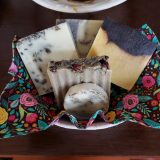 Body BarA true cold process soap for gentle, everyday cleansing.
 Beauty BarA gentle facial bar with rosehip, prickly pear and vitamin E.
Questions people ask
Is chemical free soap really possible?
Not literally, since soap, water and plant oils are all chemicals. In practice the phrase describes true soap made from saponified oils without synthetic detergents, synthetic fragrance, artificial dyes or unneeded preservatives.
Does chemical free soap contain lye?
All true soap is made with lye, but properly made and cured soap contains no free lye. The lye is consumed as it reacts with the oils to form soap and glycerin.
Is natural soap better for your skin?
Many people find simple soap with no synthetic fragrance gentler, but skin varies. If you have a skin condition, a dermatologist can help you choose. Patch testing a new bar is always sensible.
How can I tell if a soap is natural?
Read the ingredient list rather than the front label. Look for saponified oil names, named essential oils instead of fragrance, no CI color numbers, and a short list overall.
Sources and further reading
- US Food and Drug Administration (FDA), Soaps
- US Consumer Product Safety Commission (CPSC), regulation of true soap
- Personal Care Products Council, International Cosmetic Ingredient Dictionary and Handbook
- Kevin M. Dunn, Scientific Soapmaking: The Chemistry of the Cold Process
This guide is for general education and is not medical advice. If you have a skin condition, allergy, or are pregnant or nursing, talk with your doctor or a board certified dermatologist about the products that are right for you.