Is Lye in Soap Safe? What Saponification Really Means
Every true soap starts with lye, yet a well made bar contains none. Here is what saponification really does, and how to tell a properly made bar from a harsh one.

Key takeaways
- All true soap is made with lye: sodium hydroxide for bars, potassium hydroxide for liquid soap.
- During saponification, lye reacts with oils and is used up, leaving soap and natural glycerin.
- Makers add a little extra oil (the superfat) so no free lye remains in a properly made bar.
- "Lye free soap" usually means the lye step happened somewhere else, such as in a melt and pour base.
Lye has a scary reputation, and with good reason: in its raw form, sodium hydroxide can burn skin and eyes. So it is natural to ask, is lye in soap safe? The short answer is that properly made, cured soap contains no lye at all. The lye is a starting material that is used up as the soap forms. Understanding why takes a few minutes and makes you a much more confident chemical free soap shopper.
What Lye Is
"Lye" is the common name for a strong alkali. Bar soap is made with sodium hydroxide. Soft and liquid soap is made with potassium hydroxide. Long ago, people made lye by soaking water through wood ashes, which produced a potassium based lye. Today makers buy pure, food or technical grade sodium hydroxide so they can measure it precisely.
In its raw state, lye is caustic. Soapmakers handle it with gloves, goggles and care, and keep it far away from children and pets.
What Saponification Means
Fats and oils are mostly made of triglycerides: three fatty acid chains attached to a glycerin backbone. When lye meets those triglycerides, the fatty acids break away from the glycerin and bond with the sodium from the lye. The result is two new substances:
- Soap, which is the sodium salt of each fatty acid. Olive oil becomes sodium olivate, coconut oil becomes sodium cocoate, and so on.
- Glycerin, freed from the oil, which stays in a handmade bar and helps it feel gentle. See natural glycerin in handmade soap.
This reaction is called saponification, from the Latin word for soap. Once the lye has reacted, it is no longer lye. A useful comparison is table salt: it is made from sodium and chlorine, both hazardous on their own, but the result is something you sprinkle on dinner.
Why a Good Bar Has No Leftover Lye
Every oil needs a precise amount of lye to saponify completely. Makers calculate this carefully and then use slightly less lye than the oils could absorb. This deliberate shortfall is the superfat, often around 5 percent. With more oil than the lye can handle, the lye runs out first, and a little free oil remains in the bar. That is the opposite of a lye heavy bar, and it is part of why handmade soap can feel conditioning. Our step by step guide to how cold process soap is made shows where this fits.
Most of the reaction finishes within a day or two in the mold. The following weeks of curing are about water evaporating and the bar hardening, which we cover in soap curing time.
The "Lye Free Soap" Myth
You may see products advertised as lye free soap. True soap cannot be made without lye. Usually the claim means one of three things:
- Melt and pour. The maker melted a pre made soap base. That base was made with lye at a factory; the lye step simply happened earlier.
- Detergent bar. The product is not soap at all but a synthetic detergent bar. See real soap vs detergent bars.
- Ingredient list wording. The label lists "saponified oils" rather than "sodium hydroxide," which is accurate, since no lye remains, but it is not a different process.
None of these is dishonest in itself. The point is that a bar made with lye is not something to fear; it is simply real soap.
Soap Is Alkaline, and That Is Different From Lye
Finished soap has a pH around 9 to 10. That is alkaline, but it comes from the soap molecules themselves, not from leftover lye. Raw sodium hydroxide solution has a pH near 14, which is many thousands of times more alkaline on the logarithmic pH scale. If you want to know how soap's pH relates to your skin, read soap and skin pH.
How to Spot a Badly Made Bar
Lye heavy soap is uncommon from experienced makers, but it helps to know the signs:
| Sign | Likely meaning |
|---|---|
| Bar stings or burns on wet skin | Possible excess lye; stop using it |
| Liquid pockets or oily separation inside the bar | Batch did not emulsify properly |
| Hard white crystals or chunks inside | Possible undissolved lye |
| Thin, soft white powder on the surface only | Usually soda ash, a harmless cosmetic film |
| Crumbly, very brittle texture | Possible measuring error |
Soda ash deserves a note. It forms when a small amount of lye at the surface of fresh soap reacts with carbon dioxide in the air and becomes sodium carbonate. It can look chalky, but it is mild and washes off in the first use. Many makers plane or steam it off for looks.
Why Some Labels Still Say Sodium Hydroxide
Seeing "sodium hydroxide" on an ingredient list can be startling, but it does not mean the bar contains lye. There are two common ways to list soap ingredients. Some makers list what went into the pot: olive oil, coconut oil, water, sodium hydroxide, essential oils. Others list what came out: sodium olivate, sodium cocoate, glycerin, essential oils. Both describe the same finished bar. The first style is a little like listing flour, eggs and baking soda on a loaf of bread. The baking soda is there at the start, but it has changed by the time you slice the loaf. Our guide on how to read a soap label explains both styles side by side, so you can read either one with confidence.
Questions to Ask a Maker
- Do you use a lye calculator and weigh ingredients by weight?
- What superfat do you use?
- How long do you cure your bars?
- Do you test finished bars, for example with pH strips?
A careful maker will answer happily. If you have very sensitive skin, patch testing any new soap on a small area first is a good habit, and a dermatologist can help if irritation continues.
Our Take
We respect lye and handle it carefully, because it is what turns good oils into real soap. Every bar we make is weighed, superfatted and fully cured, so by the time a Body Bar reaches you, the lye is long gone and only soap, glycerin and a little nourishing oil remain. If you prefer an earthy scent, our tea tree and cedarwood Man Bar is made the same way.
From the ranch
Made in small batches, without the ingredients discussed above.
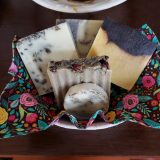 Body BarA true cold process soap for gentle, everyday cleansing.
 Man BarTea tree, cedarwood and bergamot mint in a clean, rugged bar.
Questions people ask
Does handmade soap still contain lye?
Properly made and cured soap does not contain free lye. The lye reacts completely with the oils during saponification, and makers use extra oil, called the superfat, so none is left over.
Can soap be made without lye?
True soap cannot. Melt and pour bases were made with lye earlier at a factory, and products made without lye are synthetic detergent bars rather than soap.
Why does sodium hydroxide appear on some soap labels?
Some makers list the raw ingredients used, including sodium hydroxide, even though it is consumed in the reaction. Others list the saponified oils instead. Both describe the same kind of finished soap.
What is the white powder on my handmade soap?
It is usually soda ash, a thin layer of sodium carbonate that forms on the surface of fresh soap. It is cosmetic and washes away with use. Hard crystals inside a bar are a different matter.
Sources and further reading
- Kevin M. Dunn, Scientific Soapmaking: The Chemistry of the Cold Process
- US Food and Drug Administration (FDA), Soaps
- National Institute for Occupational Safety and Health (NIOSH), Pocket Guide to Chemical Hazards: Sodium hydroxide
- Handcrafted Soap and Cosmetic Guild, soapmaking safety guidance
This guide is for general education and is not medical advice. If you have a skin condition, allergy, or are pregnant or nursing, talk with your doctor or a board certified dermatologist about the products that are right for you.