Unscented vs Fragrance Free Soap: Labels Explained
"Unscented" and "fragrance free" sound like the same promise, but they are not regulated and can mean different things. Here is how to read past the front label.

Key takeaways
- Neither "unscented" nor "fragrance free" has an official FDA definition.
- "Unscented" products may contain a masking fragrance to cover the smell of the base.
- "Fragrance free" usually means no fragrance was added, but scented botanicals can still appear.
- The ingredient list, not the front label, is the only reliable way to check.
If your skin reacts to scent, the words on the front of a soap package matter a great deal. The trouble is that two common claims, "unscented" and "fragrance free," sound identical but can mean quite different things. Understanding unscented vs fragrance free soap labels helps you find a chemical free soap that is truly gentle, rather than one that just smells quiet.
Neither term is officially defined
Start with the most important fact: the FDA has not set legal definitions for "unscented" or "fragrance free." Companies use them according to their own understanding, and practice varies. That does not mean labels are dishonest, only that the front of the package cannot tell you the whole story. The ingredient list can.
What "unscented" usually means
"Unscented" describes how a product smells, not what it contains. A product may be labeled unscented because it has no noticeable scent. But some products reach that state by adding a masking fragrance, a fragrance ingredient used to neutralize the natural smell of the base ingredients. The result smells like nothing, yet it contains fragrance.
So an unscented product can still contain the very ingredients a fragrance sensitive person is trying to avoid. Look for "fragrance," "parfum" or "masking fragrance" in the ingredient list.
What "fragrance free" usually means
"Fragrance free" describes what was not added: no ingredients whose purpose is to give the product a scent. That is closer to what most sensitive shoppers want. Two caveats remain:
- Ingredients with their own smell. A fragrance free product may still smell faintly of its base, such as oils, oats or shea butter.
- Botanicals with another stated purpose. Some products labeled fragrance free contain plant extracts or essential oils that are listed for a different reason, such as a skin conditioning claim. These can still carry natural fragrance compounds.
Dermatology groups, including the American Academy of Dermatology, generally advise people with sensitive or eczema prone skin to choose fragrance free products, and to check the ingredient list for hidden scent.
The labels side by side
| Label | What it describes | Can it contain fragrance? | What to check |
|---|---|---|---|
| Unscented | How it smells | Yes, as a masking fragrance | "Fragrance," "parfum" or "masking fragrance" |
| Fragrance free | What was not added | Not usually, but botanicals may carry scent | Essential oils, plant extracts, allergen names |
| Hypoallergenic | A marketing claim | Yes | Full ingredient list; the FDA says the term has no required meaning |
| "Lightly scented" or "naturally scented" | A choice to add some scent | Yes | Which oils or fragrance, and how many |
What natural unscented soap smells like
A true soap with no added scent does not smell like nothing. It smells like soap: faintly clean, slightly sweet or oily, sometimes with a hint of olive or cocoa butter depending on the oils. People switching from scented commercial bars are sometimes surprised. That gentle base smell is normal.
What is not normal is a sharp, sour smell like old crayons or stale cooking oil, sometimes with orange spots. That suggests the oils have gone rancid. It is not usually harmful, but the bar is past its best; see does handmade soap expire.
Why scent free matters for some people
For most people, scent is a matter of taste. For others it is more than that. Fragrance ingredients are among the most common causes of allergic contact dermatitis from personal care products, and once a person is sensitized, even small amounts can trigger itching or a rash. Others do not have a skin allergy at all, but find that strong scents bring on headaches or breathing discomfort in a small, steamy bathroom. Babies and people with eczema prone skin are often started on fragrance free products for the same reason: fewer variables means fewer surprises. In each of these cases, the difference between unscented and fragrance free is not a technicality. It decides whether the product actually solves the problem.
Where scent hides on a soap label
- Fragrance, parfum, aroma. The obvious ones. See fragrance in soap.
- Essential oils. Named individually, such as lavender oil or Citrus sinensis peel oil.
- Allergen names. Linalool, limonene, geraniol, citronellol, eugenol and coumarin often signal scent, especially on imported labels.
- Plant extracts and absolutes. Vanilla extract, rose absolute and similar ingredients add scent even if no "fragrance" appears.
For a full walkthrough of soap label vocabulary, read how to read a soap label.
Which should you choose?
- Known fragrance allergy or eczema: choose fragrance free and read the full list. A bar of saponified oils, water and glycerin with nothing else is the simplest option. Our guide to soap for eczema prone skin goes further.
- Sensitive but not allergic: fragrance free is the safest start. Some people later find they tolerate a lightly scented bar with one named essential oil.
- Scent sensitivity in the household: for headaches or a partner who dislikes perfume, a fragrance free or very lightly scented bar keeps the bathroom calm.
- No skin concerns: choose what you enjoy. If you like scent, prefer named essential oils over "fragrance"; see essential oils in soap.
If you keep reacting even to fragrance free products, a dermatologist can run patch testing to find the cause, which may be an ingredient other than fragrance.
Questions to ask a maker
- Is anything added for scent, including masking agents?
- Do any extracts or oils have a natural scent?
- Is the bar made on the same equipment as scented batches? Trace scent transfer is possible in small workshops.
Small makers can usually answer these quickly and honestly. Large brands may route you to a customer service line, but many will still confirm whether a product contains masking fragrance if you ask directly. When the answer is vague, treat the product as scented and move on.
Where our bars fit
We want to be clear about our own products. Our Body Bar is lightly scented with named essential oils, so it is not fragrance free in the strict sense. It contains no synthetic fragrance or masking agents, and every scent ingredient is on the label. If you need a bar with no scent ingredients at all, look for one made only of saponified oils, and compare labels with our short list of ingredients to avoid in soap.
From the ranch
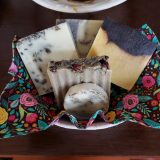
Made in small batches, without the ingredients discussed above.
Questions people ask
What is the difference between unscented and fragrance free soap?
Unscented describes how a product smells and may include a masking fragrance to cover the base odor. Fragrance free generally means no ingredients were added for scent. Neither term is defined by the FDA, so always check the ingredient list.
Can unscented soap contain fragrance?
Yes. Some unscented products contain a masking fragrance that neutralizes the natural smell of the ingredients. If you are avoiding fragrance, look for "fragrance," "parfum" or "masking fragrance" in the ingredient list.
Is fragrance free soap better for sensitive skin?
Dermatologists generally recommend fragrance free products for sensitive and eczema prone skin, because fragrance is a common cause of allergic reactions. Check that no essential oils or scented extracts are included for another purpose.
Why does my unscented soap smell?
True soap has a faint natural smell from its oils, often clean and slightly sweet. That is normal. A sharp, stale smell like old crayons or cooking oil suggests the oils have gone rancid.
Does hypoallergenic mean fragrance free?
No. The FDA says there is no federal standard for the term hypoallergenic. A hypoallergenic product can still contain fragrance, so read the ingredient list rather than relying on the claim.
Sources and further reading
- US Food and Drug Administration (FDA), Fragrances in Cosmetics
- US Food and Drug Administration (FDA), Hypoallergenic Cosmetics
- American Academy of Dermatology Association, Eczema: Tips for choosing skin care products
- National Eczema Association, Seal of Acceptance product criteria
This guide is for general education and is not medical advice. If you have a skin condition, allergy, or are pregnant or nursing, talk with your doctor or a board certified dermatologist about the products that are right for you.