Palm Free Soap: Why Many Makers Leave Palm Oil Out
Palm oil makes soap hard and creamy, which is why it is everywhere. It is also tied to tropical deforestation. Here is how to read for palm and what replaces it.

Key takeaways
- Palm oil adds hardness and stable lather, so it is a standard ingredient in commercial soap.
- Palm expansion has been linked to tropical deforestation and habitat loss, especially in Southeast Asia.
- On labels, palm shows up as sodium palmate or sodium palm kernelate, and it hides in many derivatives.
- Palm free bars use shea, cocoa butter or more coconut instead, often with a longer cure.
Pick up almost any mass market bar and you will likely find palm oil near the top of the list. It is inexpensive, it makes a hard, long lasting bar, and it is produced in enormous volume. It is also one of the most debated ingredients in personal care. Palm free soap is a choice many small makers have made, and if you care about where your chemical free soap comes from, it is worth understanding why.
Why palm oil is in so much soap
Palm oil is rich in palmitic acid, with a good share of oleic acid. In soap, that combination makes a firm bar with a stable, creamy lather that does not dissolve quickly in the shower. For large manufacturers it does the job that lard and tallow once did, at low cost and from a plant source. Palm kernel oil, pressed from the seed rather than the fruit, behaves more like coconut oil and adds bubbly lather.
So palm is not in soap because it is harmful to skin. It is there because it works well and is cheap. The questions are about where it comes from. For how palm compares with other soap oils, see the best oils for soap.
The concern: forests and wildlife
Oil palms grow best in the humid tropics, and most of the world's supply comes from Indonesia and Malaysia. Over recent decades, large areas of rainforest and carbon rich peatland in those countries have been cleared for plantations. Conservation groups and researchers have linked that expansion to habitat loss for species such as orangutans, Sumatran tigers and elephants, as well as to greenhouse gas emissions when peat is drained and burned. Reports have also raised labor and land rights concerns on some plantations.
It is fair to add two points. First, oil palm produces far more oil per acre than most alternatives, so simply replacing it with another crop could require more land. Second, the industry is not uniform: some producers have made real commitments to stop clearing forest. That is why the debate is not simple.
What about certified sustainable palm?
The Roundtable on Sustainable Palm Oil (RSPO) was founded in 2004 to set standards for responsible production, and some soap makers use only RSPO certified palm. Certification has helped in places, but environmental groups have also criticized gaps in enforcement and traceability, especially for mixed supply chains where certified and uncertified oil can be blended. Some makers decide certified palm is a reasonable compromise. Others prefer to leave palm out entirely because they cannot trace it to a specific source. Both are thoughtful positions.
How to spot palm on a soap label
| Label name | What it is |
|---|---|
| Sodium palmate | Palm oil turned into soap |
| Sodium palm kernelate | Palm kernel oil turned into soap |
| Elaeis guineensis (palm) oil | Unsaponified palm oil |
| Saponified palm oil | The plain English version of sodium palmate |
For more on decoding these names, see how to read a soap label.
Palm hides in derivatives
Palm is also a raw material for many other ingredients. Depending on the supplier, these may come from palm, coconut or other sources:
- Glycerin added as a separate ingredient
- Stearic acid and palmitic acid
- Cetyl, stearyl and cetearyl alcohol
- Many surfactants, including sodium lauryl sulfate and sodium cocoyl isethionate
- Sodium stearate, common in commercial bars and deodorant sticks
A bar can say "palm free" on the front and still contain a palm derived additive, often without the maker realizing it. A short label made mostly of saponified whole oils is the easiest kind to check. If you are unsure, ask the maker. Small makers usually know their suppliers.
What palm free bars use instead
Leaving palm out means finding another way to get a hard, long lasting bar. Common approaches include:
- Shea butter. Rich in stearic acid, it adds firmness and a creamy feel. Shea comes mostly from West African trees that grow wild and are harvested largely by women's cooperatives, though, like any crop, sourcing quality varies.
- Cocoa butter. Very hard and stable, it firms a bar in small amounts.
- A balanced share of coconut oil. It adds hardness and lather, kept in check so the bar is not drying.
- Castor oil. It does not harden the bar, but it makes lather creamy, filling part of the role palm plays.
- A longer cure. High olive bars harden steadily as they rest. Time does much of what palm would do. See soap curing time.
- Animal fats. Lard and tallow make excellent hard bars, but they are not an option for vegan shoppers.
How palm free soap feels
A well made palm free bar should feel just as solid as a commercial one. Some palm free recipes start a little softer and benefit from a well drained soap dish. If you are used to supermarket bars, you might find a palm free bar a touch creamier and less "squeaky." Our tips on making a bar of soap last longer help any handmade bar go further.
Is palm free always the greener choice?
Not automatically. Every oil has a footprint, from coconut grown on tropical islands to shea gathered in West Africa. Palm free is one thoughtful choice among several, and pairing it with a short, honest ingredient list and minimal packaging goes further than any single swap.
A quick shopper's checklist
- Scan the label for sodium palmate, sodium palm kernelate or palm oil.
- Look at the base oils. Olive, coconut and shea near the top is a common palm free pattern.
- Notice separate additives like stearic acid or sodium stearate and ask where they come from if it matters to you.
- If a bar uses palm, see whether the maker says it is certified and from what program.
Our choice
We do not use palm oil in our soap. Our Body Bar is made with olive, coconut, shea, castor and avocado oils, and our Man Bar starts from the same base. We give our bars time to cure instead. It is a small decision, but small decisions repeated in every batch add up. For the other ingredients we leave out, see ingredients to avoid in soap, or start with the basics in what is chemical free soap.
From the ranch
Made in small batches, without the ingredients discussed above.
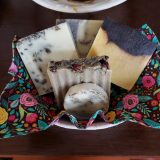 Body BarA true cold process soap for gentle, everyday cleansing.
 Man BarTea tree, cedarwood and bergamot mint in a clean, rugged bar.
Questions people ask
Why do soap makers avoid palm oil?
Palm oil production has been linked to tropical deforestation, peatland loss and habitat loss for wildlife such as orangutans, along with labor concerns on some plantations. Many small makers leave it out because they cannot trace their supply to a responsible source.
What is sodium palmate in soap?
Sodium palmate is the label name for palm oil that has been turned into soap with sodium hydroxide. It makes a hard bar with stable lather. Sodium palm kernelate is the version made from palm kernel oil.
Is RSPO certified palm oil sustainable?
RSPO certification sets standards meant to reduce deforestation and improve practices, and it has helped in some places. Environmental groups have also criticized gaps in enforcement and traceability. Whether it is sustainable enough is a judgment each maker and shopper makes.
Is palm free soap softer?
Not necessarily. Palm free bars made with shea butter, cocoa butter and coconut oil, and given a full cure, can be just as firm. Some start a little softer, so a draining soap dish helps them last.
Sources and further reading
- Roundtable on Sustainable Palm Oil (RSPO), Principles and Criteria for the Production of Sustainable Palm Oil
- International Union for Conservation of Nature (IUCN), Oil Palm and Biodiversity: A Situation Analysis (2018)
- World Wildlife Fund (WWF), Palm Oil Buyers Scorecard
- Kevin M. Dunn, Scientific Soapmaking: The Chemistry of the Cold Process (Clavicula Press)
This guide is for general education and is not medical advice. If you have a skin condition, allergy, or are pregnant or nursing, talk with your doctor or a board certified dermatologist about the products that are right for you.