Natural Glycerin: Why Handmade Soap Feels Different
Glycerin forms naturally when oils become soap. Handmade bars keep it, many factory bars do not, and that difference is a big part of why real soap feels the way it does.

Key takeaways
- Glycerin is a natural byproduct of saponification, freed from the oils as they turn into soap.
- Handmade cold process soap keeps all of its glycerin, while large scale soap production often separates it out.
- Glycerin is a humectant that draws water toward the skin, which helps explain why handmade soap can feel less tight.
- Glycerin also attracts moisture from the air, so handmade bars may bead with droplets in humid rooms.
People who switch to handmade soap often say the same thing: my skin feels different. Less tight, less squeaky, more comfortable. There are a few reasons, including the oils used and the absence of harsh extras, but one of the biggest is an ingredient most shoppers never think about. Natural glycerin in handmade soap is a quiet part of what sets a real chemical free soap bar apart from much of what sits on drugstore shelves.
Where Glycerin Comes From
Every plant oil and animal fat is made largely of triglycerides: three fatty acids attached to a backbone of glycerin. When soap is made, lye pulls those fatty acids away and turns them into soap. The glycerin backbone is left behind on its own. So glycerin is not added to a handmade bar. It is born inside it, as part of the same reaction that makes the soap. Our guide to saponification and lye explains this reaction step by step.
How much glycerin? It varies with the oils, but as a rough guide, glycerin makes up about a tenth of the weight of the fats that go in. In a cold process bar, all of it stays put.
What Glycerin Does on Skin
Glycerin is a humectant, meaning it attracts and holds water. On skin, it helps draw moisture to the outer layer. That is why it is one of the most widely used ingredients in moisturizers, and why dermatology references describe it as a well studied, well tolerated skin care ingredient.
In soap, glycerin does not stay on your skin for long, since you rinse most of it away. Still, many people notice that soap with its natural glycerin feels gentler during and after washing. Along with the small amount of unreacted oil (the superfat), it helps a handmade bar feel cleansing without leaving that stripped, tight sensation.
It also helps to keep expectations realistic. Glycerin in a rinse off product is a supporting player, not a moisturizer on its own. If your skin feels dry, the bigger levers are usually shorter, cooler showers, patting rather than rubbing dry, and applying a balm or oil while skin is still slightly damp. A glycerin rich soap simply means the cleansing step is not working against those habits. Think of it as removing an obstacle rather than adding a treatment.
Why Factory Soap Often Has Less
Large scale soap production has traditionally used a kettle or continuous process in which the soap is separated from the liquid that holds the glycerin, often by adding salt. The glycerin is then recovered and sold separately for use in lotions, foods, pharmaceuticals and many industrial products, because it is valuable on its own. Some manufacturers add a little glycerin back into the bar; others do not. Many modern commercial bars are not soap at all, but detergent bars with their own ingredient lists. See real soap vs detergent bars for how to tell.
A handmade cold process bar skips that separation step entirely. Nothing is removed after the reaction, so every bit of glycerin stays in the soap.
Handmade Soap vs "Glycerin Soap"
This is where names get confusing. The clear, jewel toned bars sold as "glycerin soap" are a different product. They are usually made from a transparent melt and pour base, which gets its clarity from added ingredients, commonly extra glycerin plus solvents and sugars such as propylene glycol, sorbitol or sucrose. Some bases also include synthetic detergents. These bars can be lovely, but "glycerin soap" does not mean "more natural."
| Handmade cold process | Clear "glycerin soap" | |
|---|---|---|
| Look | Opaque, earthy or creamy | Transparent, often brightly colored |
| Source of glycerin | Formed naturally in the bar | Formed and often added to the base |
| Other common ingredients | Oils, water, essential oils, clays | Often propylene glycol, sorbitol, sometimes detergents |
| How it is made | From scratch, then cured for weeks | Pre made base melted and molded |
Our comparison of hot process, cold process and melt and pour soap covers the methods in more depth.
Why Your Soap Sometimes "Sweats"
Here is the flip side of all that glycerin. Because it pulls water from the air, a glycerin rich bar left in a humid bathroom may bead up with small droplets on its surface. Makers call this glycerin dew or sweating. It is harmless and does not mean the soap has spoiled. It does mean the bar is softening, so it will wear down faster if it never gets a chance to dry.
A few habits help:
- Use a draining soap dish so the bar never sits in water.
- Keep the bar out of the direct stream of the shower.
- Store spare bars in a dry closet, not under the sink, and not sealed in plastic in a steamy room.
- If a bar is sweating heavily, let it air dry on a rack for a day before using it.
Our full list of tips is in how to make a bar of soap last longer, and long term storage is covered in does handmade soap expire.
Who Notices the Difference Most
People with dry skin, especially in winter, often notice the shift from a stripped feeling to a softer one. That said, glycerin is only part of the story. The blend of oils, the superfat and whether the bar has synthetic fragrance all play a role. If you are dealing with very dry or eczema prone skin, a dermatologist can help you build a routine, and our guide to natural soap for dry skin has practical ideas.
How to Tell If a Bar Kept Its Glycerin
- Look for "glycerin" on a label that lists saponified oils. That combination usually means the natural glycerin stayed.
- Ask the maker if the bar is cold process or hot process made from scratch. Both keep their glycerin.
- Notice how the bar behaves in a humid room. Light sweating is a clue that glycerin is present.
Our Bars
Because every Lucky Lady Ranch bar is made from scratch by cold process, the glycerin that forms in the pot stays in the soap. Our Body Bar pairs that natural glycerin with olive, shea and avocado oils, and if your skin enjoys extra comfort after the shower, a thin layer of our shea butter Body Balm on damp skin is a simple next step.
From the ranch
Made in small batches, without the ingredients discussed above.
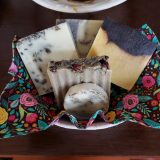 Body BarA true cold process soap for gentle, everyday cleansing.
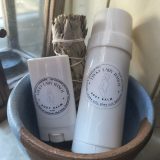 Body BalmUnrefined shea and organic beeswax for hard working skin.
Questions people ask
Does handmade soap contain glycerin?
Yes. Glycerin forms naturally when oils react with lye, and handmade cold process soap keeps all of it because nothing is removed after the reaction.
Why is my handmade soap sweating?
Glycerin attracts moisture from the air, so in a humid bathroom droplets can form on the surface of the bar. It is harmless. Let the bar dry on a draining dish and store spares somewhere dry.
Is glycerin soap the same as handmade soap?
Not usually. Clear glycerin soap is typically made from a melt and pour base that often contains added glycerin, solvents and sometimes detergents. Handmade cold process soap is made from scratch and keeps its own glycerin.
Is glycerin good for your skin?
Glycerin is a well studied humectant that helps draw moisture to the skin, which is why it appears in many moisturizers. Most people tolerate it well.
Sources and further reading
- Fluhr JW, Darlenski R, Surber C, Glycerol and the skin: holistic approach to its origin and functions, British Journal of Dermatology
- Kevin M. Dunn, Scientific Soapmaking: The Chemistry of the Cold Process
- US Food and Drug Administration (FDA), Soaps
- American Academy of Dermatology, dry skin care tips
This guide is for general education and is not medical advice. If you have a skin condition, allergy, or are pregnant or nursing, talk with your doctor or a board certified dermatologist about the products that are right for you.