Hot Process vs Cold Process vs Melt and Pour Soap
Three ways to make a bar, three different results. Here is how hot process, cold process and melt and pour soap compare, and what that means for the bar you buy.

Key takeaways
- Cold process soap reacts on its own in the mold and cures for weeks; it allows smooth bars, swirls and a short ingredient list.
- Hot process soap is cooked until saponification finishes, giving a rustic texture and a shorter cure.
- Melt and pour soap starts with a premade base; it is easy and lye free for the crafter, but the base ingredients vary widely.
- For chemical free soap, the ingredients matter more than the method, but cold and hot process give makers full control.
Handmade soap shops often mention their method: cold process, hot process, or melt and pour. These are not just maker jargon. Each method shapes the look of the bar, how long it takes to make, and most importantly for shoppers, how much control the maker has over the ingredients. Here is a clear comparison of hot process vs cold process soap, plus melt and pour, and what each means if you are looking for a simple chemical free soap.
The Short Version
| Cold process | Hot process | Melt and pour | |
|---|---|---|---|
| Starting point | Oils and lye, from scratch | Oils and lye, from scratch | Premade soap base |
| Heat | Reaction makes its own warmth | Cooked in a slow cooker or double boiler | Base is melted, then poured |
| Look | Smooth, can hold detailed swirls | Rustic, textured top | Very smooth; clear or opaque |
| Cure | About 4 to 6 weeks | Often 1 to 4 weeks | None needed |
| Maker handles lye? | Yes | Yes | No |
| Ingredient control | Full | Full | Limited to what is in the base |
Cold Process: Slow and Smooth
In cold process, measured oils and a lye solution are blended until they thicken to trace, poured into a mold, and left to react on their own. The batch heats itself as it saponifies. After a day or two it is cut into bars, which then cure for several weeks. We walk through every stage in how cold process soap is made.
Strengths: a smooth, fine textured bar; room for artistic swirls and layers; complete control over every oil and additive; natural glycerin stays in the bar.
Trade offs: the long cure, which ties up time and space; some essential oils and additives can speed up trace or change color.
Hot Process: Cooked and Rustic
Hot process starts the same way, with oils and lye, but instead of pouring at trace, the maker cooks the batter, usually in a slow cooker. It passes through stages that soapmakers describe with food words: applesauce, then mashed potatoes, then a translucent, waxy stage often compared to petroleum jelly. Once saponification is complete, the maker stirs in any essential oils or extras and scoops the thick soap into the mold.
Strengths: saponification is finished before the soap goes into the mold, so the maker can add delicate oils afterward; the bar can be used sooner; the rustic look appeals to many people.
Trade offs: the texture is coarser and harder to swirl; hot process soap still contains water that needs to evaporate, so a cure of at least a week or two gives a harder, longer lasting bar. Our article on soap curing time explains why.
Some makers believe essential oil scent holds a little better in hot process because the oils are added after cooking. Opinions vary, and recipe and storage probably matter more.
Melt and Pour: Easy, But Read the Base
Melt and pour soap begins with a block of premade base, bought from a supplier. The crafter melts it, adds color or scent, and pours it into molds. It hardens within hours and needs no cure. It is popular with beginners, crafters and families because nobody handles lye at home.
That convenience comes with a catch: the crafter does not choose the base ingredients, the supplier does. Bases vary a great deal. Some are close to true soap with a few additions. Others, especially very clear bases, include ingredients such as:
- Propylene glycol and sorbitol, which help keep the base clear and meltable.
- Synthetic detergents such as sodium laureth sulfate or sodium lauryl sulfate in some formulas.
- Added glycerin in larger amounts, which can make bars sweat in humid rooms.
Detergent free and simpler bases do exist, so not every melt and pour bar is a detergent bar. But you will need to see the full base ingredient list to know. For how to tell soap from detergent, see real soap vs detergent bars, and for why sulfates are less of a concern in true soap, see why body wash needs sulfates and real soap does not.
A note on the phrase "lye free soap": melt and pour bases were made with lye at the factory. The crafter simply skipped that step. Our article on whether lye in soap is safe explains why that is nothing to worry about either way.
What About Rebatched Soap?
You may also see "rebatched" or "hand milled" soap. This is a fourth approach in which already made soap is grated, softened with a little liquid, gently heated, and remolded. Makers use it to rescue a batch that did not turn out pretty, or to add delicate ingredients without exposing them to fresh lye. The result looks rustic, much like hot process. Since it starts with real soap, the ingredient story depends on that original batch, and the bars benefit from drying for a while before use.
Which Method Makes Better Soap?
Honestly, a skilled maker can make a lovely bar with any of these methods, and a careless one can make a poor bar with any of them too. For shoppers focused on simple ingredients, here is a practical way to think about it:
- Cold process and hot process give the maker full control. If the maker cares about a short ingredient list, these methods make it easy.
- Melt and pour can be simple or not, depending on the base. Ask what is in it.
- In every case, the ingredient list tells you more than the method name. Use our guide on how to read a soap label.
How to Tell Which Method a Bar Used
- Look at the top. Rough, textured, with a slightly marbled body? Often hot process. Smooth with fine swirls or a domed, textured top on a smooth body? Often cold process. Glassy, perfectly uniform, possibly with embedded shapes? Often melt and pour.
- Read the description. Many makers proudly name their method.
- Check the ingredients. Propylene glycol, sorbitol or sulfates hint at a melt and pour base.
- Ask. Small makers love talking about how they work.
Why We Choose Cold Process
At Lucky Lady Ranch, every bar is cold process, made from scratch in small batches. It is slower, but it lets us choose every oil and keep every ingredient simple and gentle. Our Body Bar, Man Bar and Beauty Bar are all made this way, then given a full cure before they leave the ranch.
From the ranch
Made in small batches, without the ingredients discussed above.
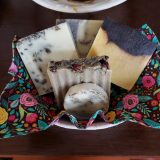 Body BarA true cold process soap for gentle, everyday cleansing.
 Man BarTea tree, cedarwood and bergamot mint in a clean, rugged bar.
Questions people ask
What is the difference between hot process and cold process soap?
Both start with oils and lye. Cold process soap reacts on its own in the mold and cures for weeks. Hot process soap is cooked until saponification is complete, giving a rustic texture and a shorter cure.
Is melt and pour soap natural?
It depends on the base. Some bases are close to simple true soap, while others contain propylene glycol, sorbitol or synthetic detergents. Ask for the full base ingredient list to know.
Does hot process soap need to cure?
Hot process soap is usable sooner because saponification finishes during cooking, but it still contains water. Most makers cure it for at least one to two weeks so the bars harden and last longer.
Which soap making method is best for sensitive skin?
The method matters less than the ingredients. A simple bar made from gentle oils, without synthetic fragrance or dyes, can come from cold or hot process. Patch test new bars and ask a dermatologist about ongoing irritation.
Sources and further reading
- Kevin M. Dunn, Scientific Soapmaking: The Chemistry of the Cold Process
- Anne L. Watson, Smart Soapmaking
- Susan Miller Cavitch, The Natural Soap Book
- US Food and Drug Administration (FDA), Soaps
This guide is for general education and is not medical advice. If you have a skin condition, allergy, or are pregnant or nursing, talk with your doctor or a board certified dermatologist about the products that are right for you.