Soap and Skin pH: What Matters and What Is Myth
Why real soap is alkaline, what that means for your skin's acidic surface, which pH claims hold up, and which are marketing myths.

Key takeaways
- Skin's surface is mildly acidic, often measured around pH 4.5 to 5.5, while true soap is alkaline, around pH 9 to 10.
- Washing with soap can raise skin surface pH briefly; in healthy skin it tends to return over a few hours.
- A real soap cannot be "pH balanced" to 5.5 and remain soap; those claims usually describe synthetic cleansers.
- pH is one factor among many: oils, superfat, fragrance, water temperature and frequency matter too.
- People with eczema or very reactive skin may do better with a lower pH cleanser; ask a dermatologist.
Few topics in skin care generate as much confusion as pH. You will see bottles labeled "pH balanced," blog posts warning that all soap ruins your skin, and handmade soap sellers insisting their bars are "neutral." The relationship between soap and skin pH is real, but it is also more modest and more nuanced than most claims suggest. Here is what the numbers mean, what research supports, and how to use that knowledge when choosing a chemical free soap.
A thirty second pH refresher
The pH scale runs from 0 to 14. Seven is neutral (pure water). Lower numbers are acidic, higher numbers are alkaline. The scale is logarithmic, so each whole number step is a tenfold change. That means pH 9 is not "a little" more alkaline than pH 7; in terms of hydrogen ion concentration it is a hundred times more.
| Substance | Typical pH |
|---|---|
| Lemon juice | About 2 |
| Healthy skin surface | Roughly 4.5 to 5.5 in many measurements |
| Many syndet cleansers | About 5.5 to 7 |
| Pure water | 7 |
| True soap, handmade or commercial | About 9 to 10 |
| Baking soda in water | About 8 to 9 |
The acid mantle, briefly
Skin's slightly acidic surface is sometimes called the acid mantle. Research suggests this acidity helps support the enzymes that maintain the skin barrier and helps favor the friendly microbes that normally live on skin. Some studies have linked a persistently higher skin surface pH with barrier problems and conditions such as atopic dermatitis, though cause and effect are still being studied.
Why real soap is always alkaline
Soap is made by reacting fats with a strong alkali (sodium hydroxide for bars). The result, a salt of fatty acids, naturally sits around pH 9 to 10 in water. That is chemistry, not a flaw. Importantly, an alkaline pH does not mean lye is left in the bar. A properly made and cured soap has no free lye; it is simply mildly alkaline the way baking soda is. Our article on whether lye in soap is safe explains saponification step by step.
You also cannot simply add acid to bring a true soap down to pH 5.5. Acidify soap enough and it turns back into free fatty acids, which do not clean the same way. That is why products advertised as "pH 5.5" are almost always syndets, made with synthetic surfactants. Our guide to real soap vs detergent bars shows how to tell them apart on the label.
What actually happens when you wash
Studies that measure skin surface pH after washing generally find that alkaline soap raises it temporarily, and that healthy skin tends to drift back toward its usual acidic range over the following hours. Syndets usually cause a smaller shift. So the question is not whether soap changes skin pH (it briefly does) but whether that brief change matters for your skin.
For many people with healthy skin, a mild, oil rich soap used once a day feels perfectly comfortable. For people with eczema, very dry skin or a compromised barrier, repeated alkaline exposure may be more of an issue, which is why many dermatologists recommend lower pH cleansers for them. See soap for eczema prone skin for practical guidance.
Myths and facts
- Myth: "Our handmade soap is pH neutral." A true soap made from oils and lye is alkaline. A seller claiming pH 7 either has a syndet or has not tested accurately.
- Myth: "Alkaline soap destroys your skin." Overstated. A brief pH rise is normal; how often you wash, how hot the water is, how stripping the formula is and whether you moisturize matter too.
- Myth: "pH balanced means gentle." Not necessarily. A low pH cleanser can still contain harsh detergents or heavy fragrance.
- Fact: Formula matters beyond pH. The oils used, superfat, retained glycerin and whether there is added fragrance all change how a bar feels.
- Fact: Higher than expected pH can signal a problem. A properly cured soap typically tests around 9 to 10. A reading well above that may suggest excess lye or a poorly made bar.
Testing soap pH at home
Curious about your own bars? Inexpensive pH test strips work reasonably well. Wet a small area of the bar, rub to make a little lather, and press a strip into it. Compare the color to the chart. Expect something in the 9 to 10 range for true soap. Results vary with the strip type and how much water you use, so treat the number as a rough guide. Freshly made soap reads higher before it fully cures, one reason makers rest bars for weeks; see soap curing time.
Water matters too
Tap water is not always neutral. Depending on where you live, it may be slightly acidic or slightly alkaline, and in many areas it is hard, carrying calcium and magnesium. Those minerals react with soap to form a film, the same scum you see on a shower door, which can leave skin feeling less clean and sometimes a little tight. If your water is hard and your skin always feels dry after washing, it may be the water as much as the soap. Rinsing well helps, and some households use a water softener or shower filter.
Practical takeaways for your routine
- Choose by how your skin feels, not by the pH claim alone. Comfortable skin an hour after washing is a better signal than a number on a bottle.
- Use soap where you need it. Underarms, groin, feet and hands need it most. Other areas often need only water.
- Keep water lukewarm and showers short.
- Moisturize after washing, especially in dry weather.
- If you have eczema, rosacea or very reactive skin, ask a dermatologist whether a syndet cleanser would serve you better.
- For your face, consider a gentler, dedicated bar. Our guide to washing your face with bar soap walks through it.
Hair is a special case, since alkalinity affects the hair cuticle. If you use a soap based shampoo bar, read shampoo bars explained for why an acidic rinse helps.
Where we land
We make true cold process soap, so our bars are alkaline like all real soap, and we will not pretend otherwise. We focus on what we can control: gentle oils, a moderate superfat, natural glycerin, a full cure and no synthetic fragrance or dyes. Our cold process Body Bar is built on olive, coconut, shea, castor and avocado oils. For the face, the Beauty Bar with rosehip and prickly pear adds extra conditioning oils. If your skin tells you a different cleanser suits it better, listen to your skin.
From the ranch
Made in small batches, without the ingredients discussed above.
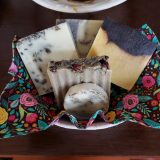 Body BarA true cold process soap for gentle, everyday cleansing.
 Beauty BarA gentle facial bar with rosehip, prickly pear and vitamin E.
Questions people ask
What is the pH of handmade soap?
Properly made and cured handmade soap usually tests around pH 9 to 10. True soap is always alkaline because of how it is made. A reading well above that range may suggest a poorly made bar with excess lye.
Is alkaline soap bad for your skin?
Not for most people. Alkaline soap raises skin surface pH briefly, and healthy skin tends to return to its normal range within hours. People with eczema or very reactive skin may prefer a lower pH cleanser; a dermatologist can advise.
What does pH balanced soap mean?
It usually means a synthetic cleanser formulated near skin's own pH, around 5.5. True soap cannot be made that acidic and still work as soap. pH balanced does not automatically mean gentle, so still read the ingredients.
What is the normal pH of skin?
Healthy skin's surface is mildly acidic. Many measurements fall roughly between 4.5 and 5.5, and some research suggests natural skin pH is often below 5. It varies by body area, age and individual.
How can I test the pH of my soap?
Lather a small amount of the bar with a little water and press a pH test strip into the lather. Compare it to the color chart. True soap typically reads around 9 to 10. Treat home readings as approximate.
Sources and further reading
- International Journal of Cosmetic Science, Lambers H. et al., Natural skin surface pH is on average below 5, which is beneficial for its resident flora (2006)
- National Institutes of Health (NIH), National Library of Medicine, research on cleanser pH and the skin barrier
- American Academy of Dermatology (AAD), guidance on choosing cleansers
- National Eczema Association, guidance on bathing and cleansers
This guide is for general education and is not medical advice. If you have a skin condition, allergy, or are pregnant or nursing, talk with your doctor or a board certified dermatologist about the products that are right for you.